


Electrohydrodynamic equipment
Electrohydraulic action - this new industrial expedient of transforming of electrical energy in mechanical, committed without mediating of the intermediate mechanical links, with high boiler efficiency.
The Essence of this expedient consists that at realisation in bulk of the fluid which are in an open or barred bulb, specially generated pulsing electric discharge round allowed band of its formation there are hydraulic pressures, capable to commit the useful mechanical operation and tracked by the complex of physical and chemical appearances.
 At the heart of an electrohydraulic action lies earlier obscure appearance of sharp magnification of hydraulic and hydrodynamic effects and amplitude of a percussion at realisation of pulsing electric discharge in ionoprovodjashchej fluids under condition of the maximum linear shrinkage of pulse duration, as much as possible steep front of a pulse and a pulse shape, close to the aperiodic.
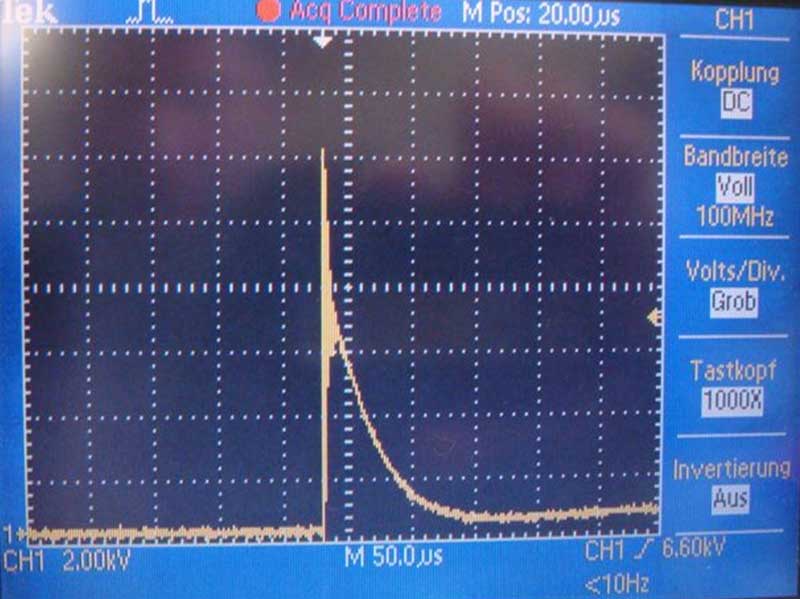
From here follows, that the major factors defining originating of an electrohydraulic action, the amplitude, a front steepness, the moulding box and duration of an electrical pulse of a current are. Pulse duration of a current is metered in microseconds, therefore the instantaneous power of a pulse of a current can attain hundreds thousand kw. A front steepness. A current pulse institutes velocity of spreading of the channel of bit. At an applying voltage on discharge welding rods in some tens kilovolts the amplitude of a current in a pulse attains tens thousand amperes. All it stipulates sharp and significant ascending of stress in the fluids, powerful mechanical operating of bit calling in turn.
electrohydraulic action Realization is linked to rather slow upbuilding of energy in the power source and its almost instant stressing in liquid medium.
the Basic operating factors an electrohydraulic action are the high and superhigh pulsing hydraulic pressures, resulting in to emersion of shock waves with acoustical and hypersonic velocities; the significant pulsing movements of bulks the fluids committed with velocities, attaining hundreds metres per second; powerful pulsewise originating cavitation processes, capable to encompass rather great volumes of fluid; infra and hypersonic radiatings; mechanical resonance appearances with the amplitudes, allowing to realise mutual shelling from each other multicomponent solid bodies;
All these factors allow to render on fluid and the installations put in it, rather miscellaneous physical and chemical affectings.
Technology equipment
Elektrogidroudarnye arrays:
a crushing principle: electrohydraulic
an instantaneous power in a pulse: to 1 Gvt
frequency of pulses: from 1 to 10 Hz
oscillator power supply: 400 In h 50 Hz
an input: to 10 kw
Appearance of the equipment:
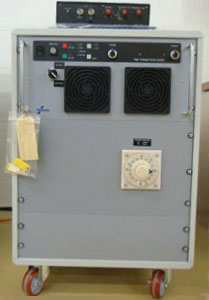
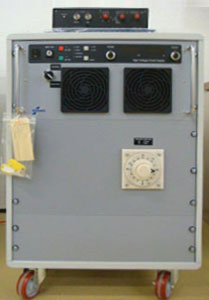
The surge generator |
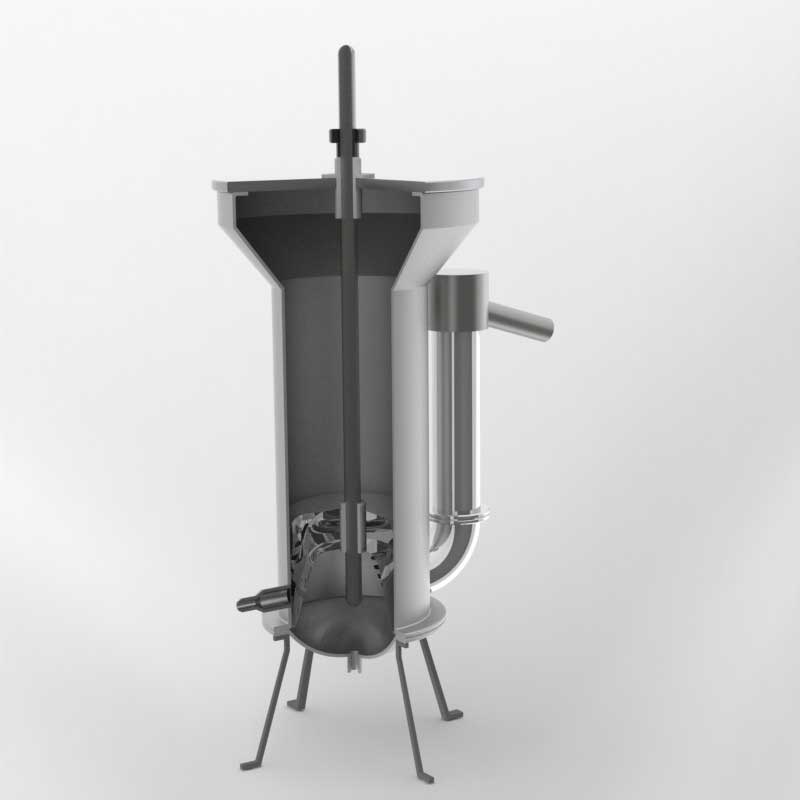
Granulating machine |
|
|
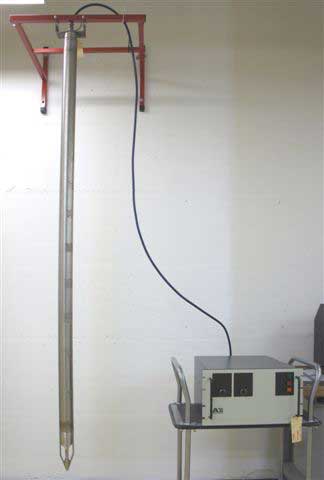
the Borehole electrohydrodynamic equipment:
Performances:
The Maximum energy of a pulse (Bit), kdzh 1
Frequency of pulses, Hz 0,1-10
The Submersible (borehole) instrument (Spark gap):
Length, mm 2500
Diameter, mm 78
Weight, kg 20
Demands to a cable: high-voltage monoconductor with isolation on a puncture to 60 kv
Working conditions: stress to 150 atm
 |
Power source: Power 6 kW The Supply voltage three phases 400V/50Hz The Output voltage 30 kV A charge Current 200 mА Regulation on a current And to stress. |
Borehole modulus: Power of bit 1 kJ. Stress of a charge Capacitors 30kV The Current of a charge of capacitors 200mA The Adjustable discharge circuit. Velocity of water treatment of a hole 1-3 metres per minute. Diameter of the modulus - 76 mm Modulus Length - 2500 mm |
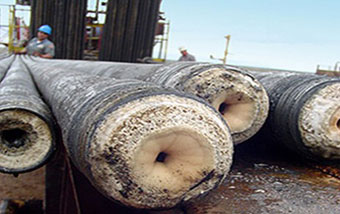
Water treatment of solid depositions from interior surfaces of metallical tubes in holes
Depositions
Width 8-10 mm Tube (steel)
Diameter of 150 mm Breakings down of depositions and compartment of large pieces depositions pipe wall
|
|
Bit by power of 500 J frequency of 1 Hz. |
In 10 seconds there is a mass compartment of depositions from a pipe wall. In 15-25 seconds of deposition completely separate from a pipe wall. |
|
|
Essence of an electrohydraulic action
electrohydraulic action Realization is linked with Rather slow upbuilding of energy in a radiant Power supplies and its almost instant stressing in the liquid To medium.
the Basic operating factors an electrohydraulic action are high and superhigh pulsing The hydraulic pressures, the shock resulting in to emersion Surges with acoustical and hypersonic velocities; the significant Pulsing movements of bulks the fluids committed With the velocities attaining hundreds of metres per second; powerful pulsewise originating cavitation processes, capable to encompass rather great volumes of fluid; infra - and hypersonic radiatings: the mechanical resonance Appearances with the amplitudes, allowing to realise mutual shelling from each other the multicomponent solid Skew fields;
All these factors allow to render on fluid and installations, Put in it, rather miscellaneous physical and chemical affectings.
Branches of application of electrohydrodynamic technics (equipment)
Thanks to particular virtues, Eg-technics allow to carry out effectively the problems not solved or difficultly solved by traditional methods. EG - technics help to solve problems in engineering industry and technique reconditioning, in agriculture and melioration, in construction and at development of minerals, in mining and hydrometallurgical production, in medicine. Some concrete instances are more low resulted.
In manufacturing engineering
As it is known, in engineering industry of a detail and stock material for them gain more often casting, drop forging, welding, pressing from powders. We will esteem some effective EG - the processes used in enumerated technics.
Casting is manufactured by a charging hot-metal in specially prepared moulding boxes. For the major details which are not demanding a split-hair accuracy of sizes, are used earth (in the core, consisting of arenaceous quartz) moulding boxes. After concreting and chilling cast should be extracted from the moulding box, as becomes by means of special shakers. However the sand burns and remains parts on cast. Specially it is complicated to remove rods (moulding box members) which one are erected for deriving of vacuities and openings. Difficulties are linked by that the rod which one is enclosed by molten metal and consequently works at elevated temperatures, not only burns more, but also is fabricated of stronger material. Traditionally water treatment of casts from the scorched sand is manufactured by the operative in a breathing mask a buster or a pneumochisel (operation harmful and unproductive).
The Eg-technology allowing efficiently to solve a problem [1 Is designed; 2]. Cast is erected on a grating which one is pulled down in a bosh with water, to cast welding rods from above are fed, bits on the earthed cast are carried out. A contraction shock wave, going on through metallical cast, on boundary turns to a surge of an extension which one shatters the scorched sand and all non-metallic stratifications having diverse acoustic performances. The hydrocurrent carries up all exfoliating of bins and openings.
Crushing - for cases of refinement (mechanical) diamonds and solid diamondlike materials, production of chemically pure powders - is bounded prochnostnymi by possibilities of the instrument. Eg-crushing solves all problems. In the camera-granulating machine (fig. 3) boots a portion of a material which one is handled in water. At the expense of operating of shock waves the material is shattered and crushed. For deriving of fragments of the given size at the bottom of a granulating machine arrange a sieve. Eg-process ensures: - Refinement of fragments of solid materials (diamonds, carbides, nitrides, ceramics, elbora) till 1-10 a micron; - Deriving acute neokatannyh the basils indispensable in production of the abrasive tool (for example, adamantine drills); - High chemical cleanness of a ground yield (at process implementation by the working instrument water is).
Water treatment from technological and production stratifications.
The problem of strife with stratifications, obrazuemymi on midwalls of tubes of various devices Is known. Special problems originate at usage rigid (containing salt of calcium, predominantly lime carbonate) waters at water service and in calorific heaters (heat sinks, dryers, the boiler equipment). "Stiffness" salts at water heat precipitate, which one derivates the strong deposition similar on properties on marble. This sediment (frequently call as incrustation) prevents a canal and, having the worst in 200-300 times thermal conductivity, sharply slashes a convective heat exchange (at 3 mm of width of a sediment - of power loss compound to 25 %). eg - Bits in a tube, the filled water, or on a tube in a bosh with water easily shatter depositions which one then are carried up by a hydrocurrent.
Agriculture and melioration
Boulders on fields sometimes cannot be inferred for field breaking points - they should be shattered on site. Usage of explosives result ins to clogging of weeding by splinters. The Eg-technology ensures shatterproof breaking down of rocks dimensioned in some cubic metre. Openings-shpury in diameter of 25 mm and length 500 mm are in stone wimbled. The blasthole is toped up by water, and in it the exploder (can represent two insulated cables stripped which one extremities are erected with the given gap) is erected. Bit at which one the shock wave reshapes a fracture is manufactured, and the hydrocurrent telescopes a fracture, ensuring breaking down - otkol a rock.
Screens of water supply wells in the course of operation are silted - kalmatirujut therefore the debit (efficiency) drops, frequently such holes should be closed down. EG - treating of allowed band of the screen by the special discharge device which has been pulled down in a hole, realises it dekalmatatsiju (4). Debit magnification in 2,5-3 times is thus attained.
Construction
At redesigns there is a problem of breaking down of the old ferro-concrete foundations and buildings. Application of explosives without a stopping of production and specially in buildings - is unsafe, the buster therefore is traditionally used. Eg - the technics frequently helps is shatterproof and it is secure to solve this problem: blastholes are drilled and Eg - shocks shatter integrity of a construction which one then is much more sweeping (in times) is knocked down by means of busters.
the Rejected and waste ferro-concrete articles - a problem of cities and ferro-concrete production plants where about 2-5 % of discard were enabled. Breaking down Ferro-concrete articles on EG - the arrays analogous used for water treatment of casting, allows to partition and salvage a concrete rock and the fixture
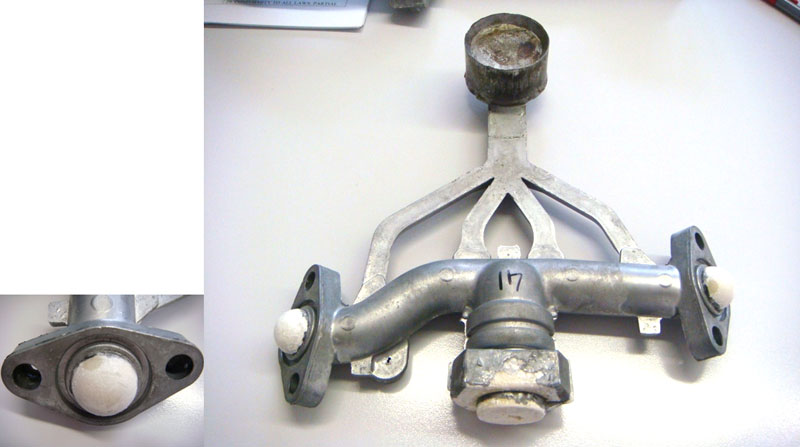
Experiment on is cavitation-electrohydrodynamic water treatment of investment casting
Article before water treatment |
 |
Article after water treatment |
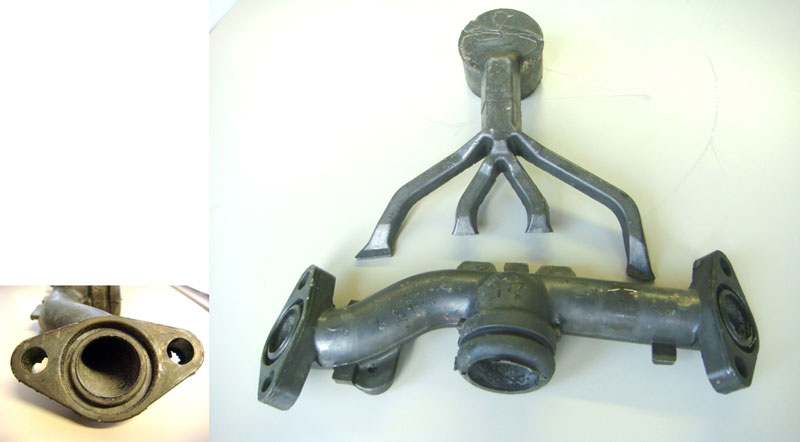 |
Time of water treatment of 3-7 minutes. |


